

Modern showers involve multiple hidden plumbing components working together. This guide explains how shower systems work so you can plan your layout confidently before construction begins.

Understand water flow, pipe planning, and fixture placement for a smooth and efficient shower installation.


We provide the best services ensuring your outstanding growth Lorem.

UNDERSTANDING THE BASICS
Many homeowners choose rain heads, handheld wands, or body sprays without realizing these require additional plumbing components installed inside the wall during construction. Once walls are finished, changes become difficult and costly.
Once a valve is installed inside the wall, it remains there permanently — making early selection critical.
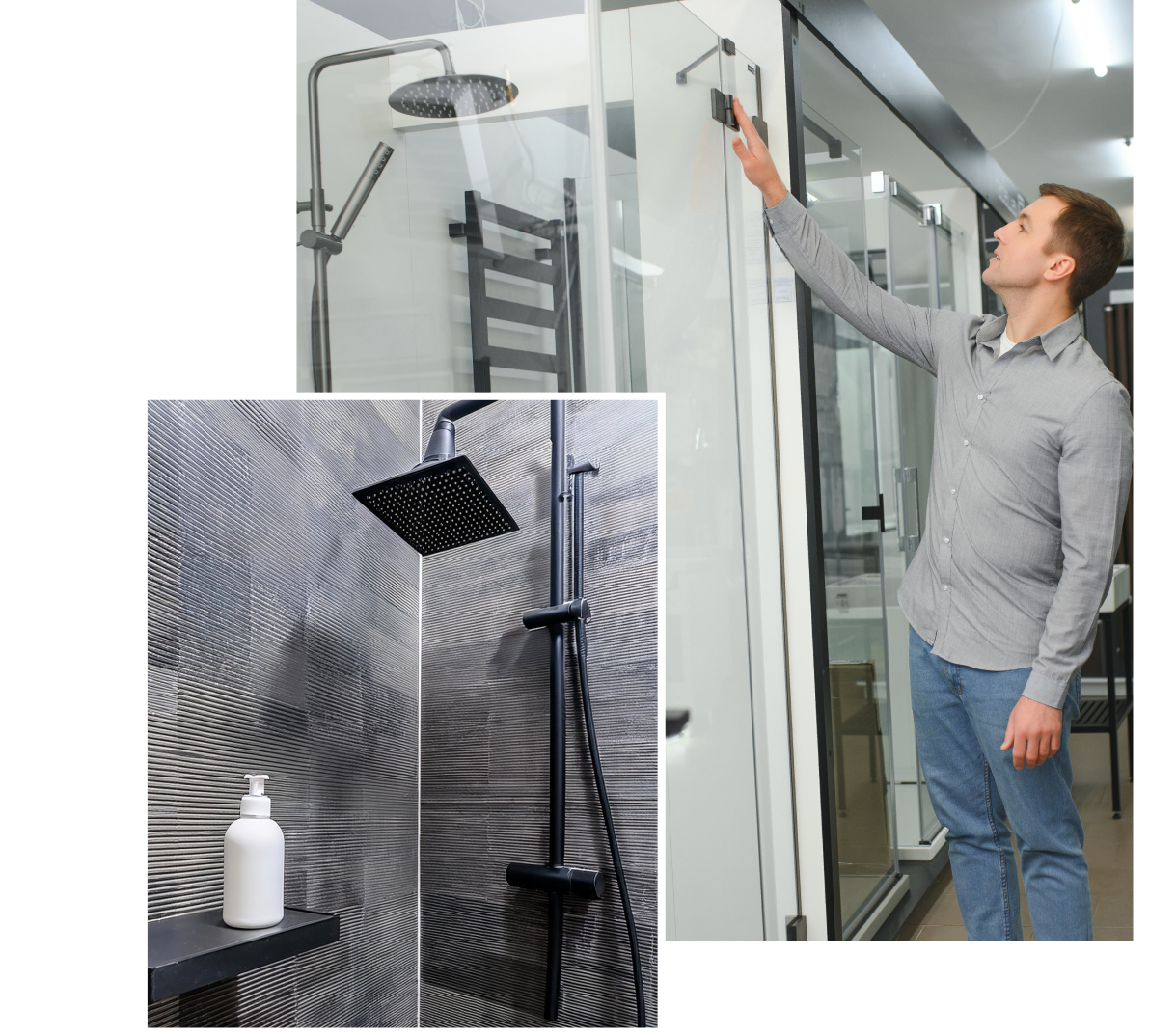
These parts work together to control water flow, temperature, and delivery to every outlet in your shower.
Central control installed inside the wall permanently.
Visible decorative controls handle, plate, and knobs.
Directs water between multiple outlets.
Primary wall-mounted water outlet.
Flexible hours outlet on sliding bar or bracket.
Rain heads, body sprays each requires its own plumbing.
CORE COMPONENT
The shower valve is installed inside the wall and connects hot and cold water supply lines. It controls temperature, pressure, and overall water flow. Once installed, it stays hidden behind the wall permanently. The visible trim kit is what homeowners interact with daily.
Balances hot and cold water supply.
Regulates water flow rate throughout the system.
Hidden inside wall — must be selected before rough-in.
Maintains consistent temperature by balancing hot and cold pressure. Common in most residential homes.
Set a precise temperature — maintained automatically every use. Ideal for multi-outlet and spa-style showers.
The trim kit is the visible, decorative portion of the shower control system — the handle, plate, and knobs homeowners interact with. Available in finishes that match other bathroom hardware.
Common finishes include:

Chrome

Brushed Nickel

Matte Black

Brass

Champagne
A diverter directs water between multiple shower outlets. If your shower has a standard head and a handheld wand, the diverter lets you switch between them — or run both simultaneously in some systems.
Basic shower with one head requires no diverter.
Rain head + handheld wand requires a diverter to switch between outlets.
Each outlet delivers water differently. Understanding the options helps you plan the right combination.
WALL MOUNTED
Most common outlet. Typically mounts 80 inches above floor. Provides the main water spray for the shower.
SLIDING BAR / BRACKET
Connected via flexible hose. Ideal for rinsing, cleaning, bathing children, and accessibility needs.
CEILING / OVERHEAD ARM
Simulates rainfall from above. Creates an immersive, spa-like shower experience.
WALL MOUNTEDSETS
Installed in sets of 2, 4, or 6. Spray horizontally for full body coverage. Require careful water pressure planning.
From simple to spa-level — choose the layout that fits your lifestyle.

This configuration is common in many bathrooms and does not require a diverter.

The diverter allows the user to switch between the shower head and handheld wand.

This setup provides both overhead rainfall and handheld functionality.

These systems require careful plumbing design and should be planned early in the project.
TECHNICAL PLANNING
When multiple outlets are installed, the home’s plumbing system must supply enough water to all of them. Larger systems often require thermostatic valves to regulate flow more effectively.
Starting pressure affects all outlet performance.
Larger diameter pipes support higher flow rates.
Thermostatic valves manage multi-outlet flow better.
More outlets running at once increases total water demand.

Standard shower heads mount approx. 80 inches above floor.

Sliding bar height adjusts for all users comfortably.

Proper spacing ensures balanced, even coverage.

Outlets must be spaced to avoid interference.
Shower systems must be selected before plumbing rough in begins. Plumbers must install valves, diverters, and water supply lines inside the wall before drywall is placed. Changing systems after rough-in requires opening finished walls.
⚠ After drywall is installed, changes require opening finished walls — a costly process.
Consider how you'll use the shower each day. Some prefer simplicity, others enjoy a spa-style experience. Let your routine guide your layout.
Multiple outlets create a luxurious experience but increase plumbing complexity and water demand. Choose a layout that balances comfort and efficiency.
Showrooms have working displays that let you experience different shower systems in person before deciding. Many offer live demos.
UP NEXT
Learn about appliance types, sizing, cabinet planning, and the electrical and ventilation requirements that affect your construction plan.